
Best Sunglasses for Diamond Face Shape: The Complete Style Guide
Best Sunglasses For Diamond Face Shape
8 min read • Updated 2 July 2026
Sunglasses for a diamond face shape work best when they widen the appearance of a narrower forehead and soften the sharp angles of high, prominent cheekbones. The right diamond face shape sunglasses frame those cheekbones instead of competing with them — the wrong pair sits directly on top of your widest feature and makes it read even more pronounced.
This guide covers:
-
How to identify a diamond face shape, and how to tell it apart from a heart-shaped face
-
The frame principles that create balance on diamond faces
-
The best sunglass styles, with specific guidance for men and women
-
Styles to avoid, plus fit and sizing details
Not sure which face shape you have yet? The face shape guide for glasses walks through how to measure your proportions in a few simple steps.
What Is a Diamond Face Shape?
A diamond face shape is widest at the cheekbones, with a forehead and jawline that are both noticeably narrower. The chin tapers to a soft point, and the silhouette reads as angular through the mid-face rather than rounded or square.
Key characteristics:
-
Cheekbones are the widest point of the face, visibly so
-
Forehead is narrower than the cheekbones
-
Jaw is narrow, with a chin that tapers to a point
-
Strong, defined angles through the cheek area
Notable examples of a diamond face shape include Vanessa Hudgens and Zayn Malik.
The most common mix-up is diamond versus heart. A heart-shaped face is also narrow at the jaw, but its widest point is the forehead rather than the cheekbones. If you’re between the two, the sunglasses guide for heart-shaped faces would help you narrow it down.
To check at home: pull your hair back, look straight into a mirror, and compare your forehead, cheekbone, and jaw width. If your cheekbones are clearly the broadest measurement, you have a diamond face shape.
What Makes a Sunglass Frame Work on a Diamond Face
Look for these qualities when comparing sunglasses — they create balance on a diamond face:
-
Width at the brow, not the lens centre. A frame that carries visual weight at the top draws the eye upward instead of sitting on your widest feature.
-
Curved or softened edges over sharp angles. Contrast, not repetition, balances an angular mid-face — a rounded silhouette works harder here than a sharp one.
-
Proportional width. Too narrow pinches at the cheekbones and exaggerates them; the right width distributes weight more evenly.
-
Avoid: frames with no weight at the top, very small or narrow styles, and anything that mirrors the face’s own angular lines.
The Best Sunglasses for Diamond Face Shapes
1. Round Sunglasses for Diamond Face Shape
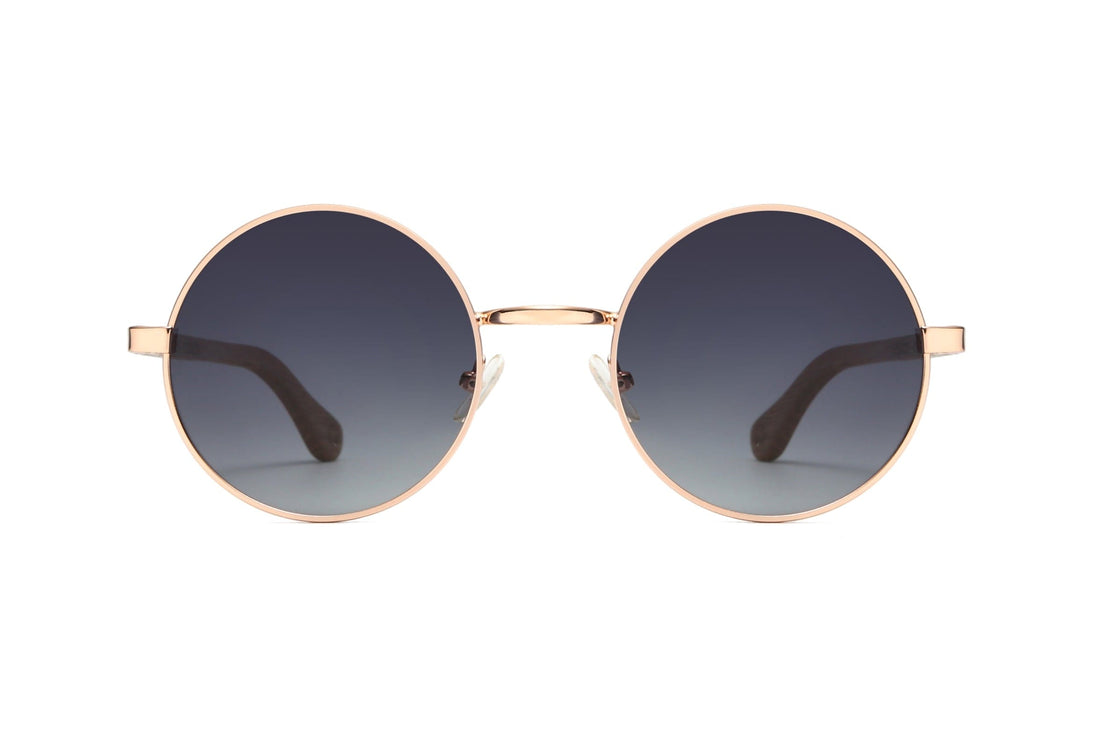
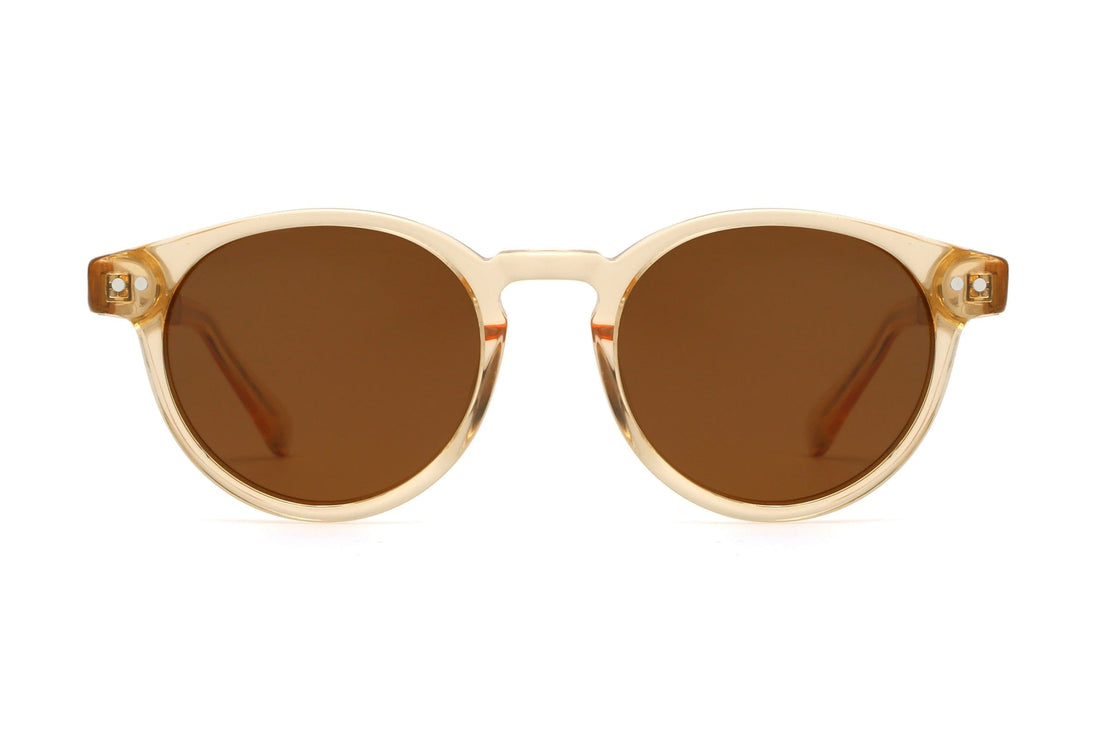
Round sunglasses are one of the most flattering categories for a diamond face. That’s because the curved silhouette directly counters angular cheekbones, introducing softness exactly where the face is sharpest. It’s contrast, not repetition, that creates the balance. A frame that just echoes the face’s own angular structure won’t do much for you. But enough presence in a round frame softens the whole look without making it shapeless.
Size decides whether the shape actually works for you. A very small round frame gets lost against strong cheekbones, so it never registers as contrast. A medium-to-large round anchors the mid-face instead. If you wear one pair of diamond face shape sunglasses daily, size up and make it your default. Women can size down slightly without losing the effect.
2. Cat-Eye Sunglasses for Diamond Faces
Cat-eye sunglasses solve two problems on a diamond face at once. The upswept corners create width right at the brow line, exactly where a narrower forehead needs it most. At the same time, since the frame’s mass stays up top, it avoids adding any bulk down at the cheekbones. That combination is rare — most shapes only fix one side of the equation. The result balances and lifts, instead of just neutralizing the widest point.
How dramatic the sweep should be comes down to your style. Want the frame to do noticeable work? A bolder sweep creates a stronger widening effect for larger diamond faces. A softer, semi-rimless version gives the same lift with a lot less attitude for daily wear. Either way, a keyhole or winged bridge helps by sitting the frame slightly higher on the nose — and for women, cat-eye is often the strongest starting point in this whole guide.
3. Browline Sunglasses for Diamond Faces
Browline sunglasses pair a thick upper rim with a much lighter lower half — and on a diamond face, that puts weight exactly where it’s needed, at the forehead. The lighter bottom half keeps cheekbone level uncluttered. For men with a diamond face shape, the brow-heavy structure does real proportional work without asking for a fashion-forward commitment. Not because it's flashy. Because it reads as considered without feeling like a deliberate fashion statement.
It also happens to be one of the most dependable everyday picks in this whole guide — it works outdoors, driving, and at the office without much thought. The strong brow line does the balancing work quietly. Bridge placement matters here, though: a low bridge can pull emphasis back toward the cheekbones, undoing the point of the shape entirely. A standard or slightly higher bridge keeps the brow-line effect intact. Worth checking before you commit to a pair.
4. Geometric Sunglasses for Diamond Face Shapes
Not fully round, not fully sharp — softened geometric frames occupy a useful middle ground for diamond faces. Think a hint of hexagon, or rounded corners built onto an otherwise angular base. They add real structure at the brow without echoing the sharp lines the face already has at the cheekbones. That’s the difference between a geometric shape that helps and one that just repeats the problem. It also skips the slightly retro feel a full round frame tends to carry.
Round frames feel too throwback for you? Geometric is worth trying next, since it delivers most of the same contrast with a noticeably more current finish. It’s also a strong pick for anyone who wants a bit of visual distinctiveness without fighting the face’s own proportions. The key is keeping the edges softened rather than sharp and boxy. Browse the geometric sunglasses collection for styles built exactly this way.
5. Aviator Sunglasses for Diamond Face Shapes
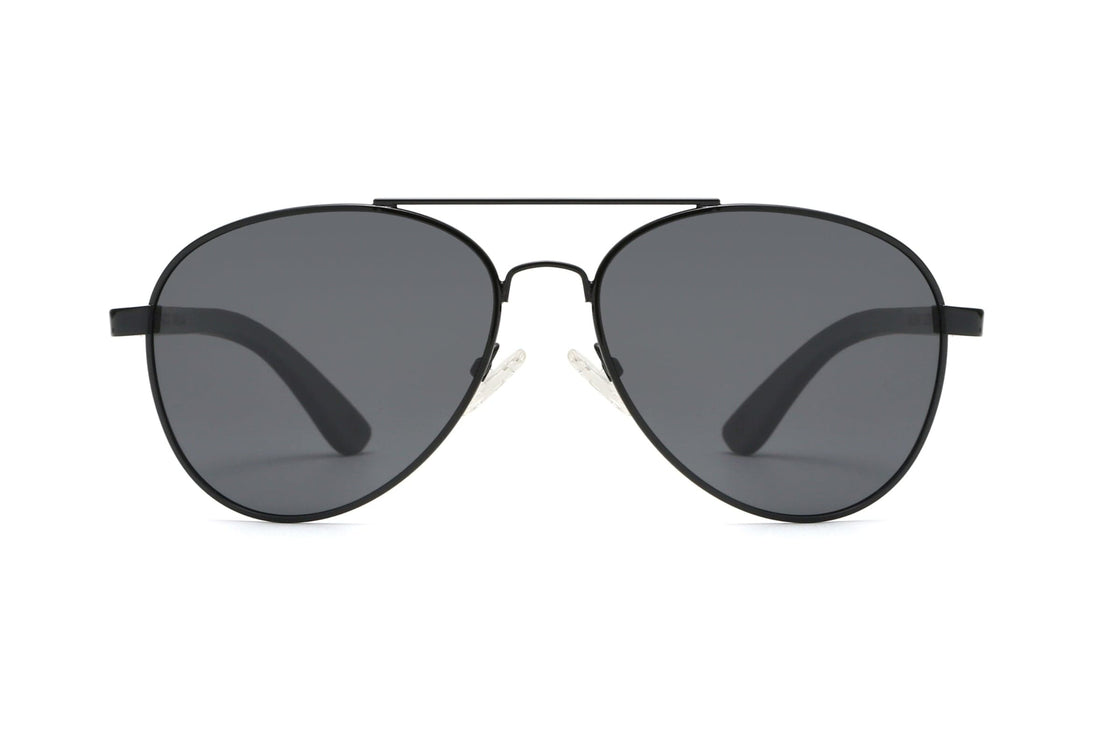
Aviators build a wide upper frame that tapers down into a teardrop lens, and that width sits exactly where a narrower diamond forehead needs it. The taper at the bottom does more work: it suits an already-pointed chin instead of fighting it. Most generic sunglasses advice misses this entirely — it just says aviators “suit most faces” and stops there. Among diamond face shape sunglasses, this is a more complete answer, since it accounts for both ends of the face at once — the forehead and the chin.
A classic aviator holds up outdoors, driving, and in everyday wear, without ever needing a deliberate style decision. The proportional logic holds across most diamond face sizes, not just a narrow band of them. For men with a diamond face shape, it's one of the most versatile picks in this guide — familiar enough to wear without a second thought, structured enough to do real proportional work. That reliability is what makes it perform so consistently on this particular structure, not any passing trend.
Sunglasses to Avoid on a Diamond Face Shape
A few styles consistently work against a diamond face’s natural proportions:
-
Bottom-heavy frames pull visual weight toward the jaw, the narrowest part of the face, which is the opposite of what a diamond shape needs.
-
Very narrow or small frames sit tightly against the cheekbones with nothing to counterbalance them, making the cheekbones look even more dominant.
-
Sharp, boxy square frames with hard right angles repeat the face’s existing angularity instead of contrasting it, which can read as rigid rather than balanced.
-
Rimless or ultra-minimal styles offer no frame mass to redirect attention upward, leaving the cheekbones as the only visible structure.
Frame Fit and Sizing for a Diamond Face Shape
Getting the shape right only pays off if the sizing works too. A few numbers worth knowing:
Frame width: Look for a total width of roughly 135–145mm. Anything narrower than about 130mm tends to sit too close to the cheekbones and loses the balancing effect entirely.
Lens depth: Lenses with at least 38–40mm of vertical height fill the lower face proportionally. Flat, shallow lenses can make the distance from cheekbone to chin look longer than it is.
Bridge fit: A properly fitting frame should sit comfortably on the nose without sliding or pinching — a poor fit affects both comfort and how consistently you’ll actually wear a pair outdoors. A keyhole or saddle bridge tends to hold a diamond face frame at the right height without it drooping toward the jaw.
What to avoid at the cheekbones: If a frame feels tight across the mid-face when you try it, it’s running too narrow. That tightness usually means the frame will sit directly on the cheekbones instead of framing them from above.
Key Takeaways
-
A diamond face shape is widest at the cheekbones, with a narrower forehead and a tapering chin — distinct from a heart face, where the forehead is the widest point.
-
The most effective sunglasses add visual width at the brow line and introduce softness that contrasts the face’s natural angularity.
-
Round, cat-eye, browline, geometric, and aviator are the diamond face shape sunglasses categories that consistently work, each balancing the face through a slightly different mechanism.
-
Frame width (roughly 135–145mm) and lens depth matter as much as the shape category — the right silhouette in the wrong size won’t deliver the same balance.
-
Avoid bottom-heavy, very narrow, sharp boxy square, and rimless styles, all of which work against a diamond face’s proportions.
Bottom Line
A diamond face shape gives you real structure to work with — high, defined cheekbones that most frames simply need to balance rather than disguise. The principle behind every recommendation here is the same: add width at the brow, introduce softness through the lens shape, and keep the frame proportional to your widest feature rather than sitting right on top of it.
If you’re ready to shop, Kraywoods sunglasses cover every style above, handcrafted from sustainable wood, acetate, and premium metal, with full UV protection and polarized options across the line. Prescription sunglasses options are also made in-house at our Canadian optical lab, so you don’t have to choose between the right shape and a lens quality you can rely on.
Also shopping for everyday eyeglasses? See our guide to glasses for diamond face shapes.
Frequently Asked Questions
What sunglasses look best on a diamond face shape?
Round, cat-eye, browline, geometric, and aviator sunglasses are the strongest diamond face shape sunglasses categories. All five add visual width at the brow line or introduce softness that contrasts prominent cheekbones. Frame width and lens depth matter as much as the shape you choose.
Is a diamond face shape rare?
Yes, diamond is considered one of the less common face shapes, since it requires cheekbones that are noticeably wider than both the forehead and jaw. That rarity is part of why generic frame advice, built around more common shapes like oval or round, often doesn’t translate well to diamond faces.
What sunglasses should diamond face shapes avoid?
Bottom-heavy frames, very narrow or small styles, sharp boxy squares, and rimless sunglasses tend to work against diamond face proportions. These styles either add weight in the wrong place or leave the cheekbones with nothing to balance them. Frame width around 135–145mm is generally a safer range.
What’s the best sunglasses shape for diamond face shape men?
Browline and aviator sunglasses are the most versatile picks for men with a diamond face shape. Both concentrate visual weight at the brow line, which widens the appearance of a narrower forehead and balances prominent cheekbones without requiring a deliberate fashion statement.
Should diamond face shapes prioritize polarized or UV-protective sunglasses?
Yes. Sunglasses that block 100% of UVA and UVB rays are worth prioritizing regardless of face shape or frame style, since sun exposure affects everyone’s eyes the same way. Polarized lenses add glare reduction on top of that protection, which is worth factoring in before choosing between frame shapes.
How can you tell a diamond face apart from a heart-shaped face?
The difference comes down to which measurement is widest. A diamond face is widest at the cheekbones, while a heart-shaped face is widest at the forehead. Both narrow toward the chin, which is why the two shapes are commonly confused without a direct side-by-side comparison.
 Heba Ahmed
Best Sunglasses for Diamond Face Shape: The Complete Style Guide
Shop by category